
Abuja in 2026 is a city where government stability, diplomatic presence, and a genuinely landmark hospitality investment are combining to create the most significant commercial design opportunity Nigeria’s capital has seen in years. At the centre of it sits one project that has set the benchmark for the entire FCT market: the expansion of the Transcorp Hilton Abuja.
The Transcorp Hilton Expansion: Abuja’s Design Benchmark
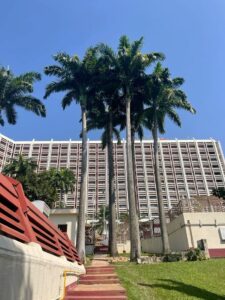
Among the landmark hospitality developments identified in the Hotel Chain Development Pipelines in Africa 2026 report from the W Hospitality Group, the expansion of the Transcorp Hilton in Abuja stands out as the single most consequential hospitality project in the capital’s history. This is not a refresh or a refurbishment, it is a major expansion by one of the FCT’s most established and trusted hospitality brands, and it signals genuine, structural confidence in Abuja’s medium-term demand.
For Abuja’s broader commercial and hospitality design market, the Transcorp expansion functions as a quality benchmark. Projects across the FCT, from boutique hotels to corporate headquarters to government and embassy interiors, are increasingly being evaluated against the specification standard that a project of this scale and visibility sets. MOD-ii’s Abuja hospitality and commercial practice is built around meeting and exceeding that benchmark, not simply matching the local market average.
What’s Driving Abuja’s 2026 Commercial Market
Several distinct forces are converging on the FCT this year, and together they explain why Abuja’s commercial design pipeline looks stronger in 2026 than at any point in recent memory.
The Nigeria Tax Act 2025, effective from January 2026, is formalising property transactions across the country, and Abuja, with its concentration of government, diplomatic and corporate tenancies, is particularly well positioned to benefit. Formalised, properly documented lease structures give both landlords and tenants greater confidence to invest in fit-out quality, because tenure and depreciation become clearer. MOD-ii has already seen this translate into stronger demand for full-service interior architecture from FCT clients who would previously have occupied standard-grade space.
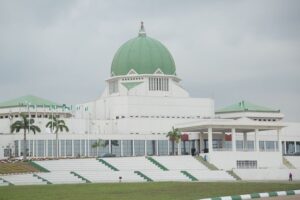
Government and institutional demand remains a structural anchor for Abuja’s Grade A market. Maitama continues to command the strongest demand within the FCT, with ministries, the National Assembly, international oil companies and major Nigerian corporates all competing for premium space. Grade A vacancy in Abuja has remained comparatively tight relative to Lagos’s more volatile, decentralising market, a reflection of Abuja’s more stable, institutionally-driven demand base.
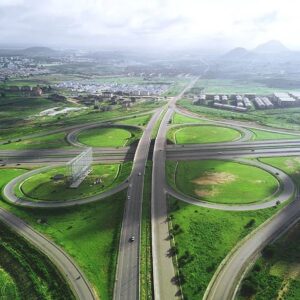
The Airport Road corridor is emerging as a genuine third commercial district, alongside the established Maitama and Wuse zones. As Abuja’s urban footprint expands, Airport Road is increasingly attracting new commercial development that benefits from improved connectivity to Nnamdi Azikiwe International Airport without the premium pricing of the most established central districts.
Falling inflation and the Central Bank’s February 2026 rate cut to 26.5% are easing financing costs across the board, a particularly significant factor for the institutional, embassy and corporate clients who dominate Abuja’s commercial market and who typically finance fit-out investment through structured capital programmes rather than ad hoc spend.
Designing for Abuja’s Diplomatic Quarter
Abuja hosts 107 diplomatic missions, and this concentration of embassies and high commissions creates one of the most distinctive and demanding interior design briefs in Nigeria.
Sovereign procurement processes move at a different pace and through different channels than private commercial work, and a design partner working in this space needs genuine experience navigating government-to-government procurement, security clearance requirements, and the specific compliance frameworks each mission operates under.
Security specification typically adds 18 to 25% to project cost relative to comparable commercial work, a reflection of the blast-resistant glazing, controlled access systems, and structural hardening that diplomatic facilities require as standard, not as an optional upgrade.
Cultural representation is a genuine design brief, not a decorative afterthought. An embassy interior has to project the identity of a sovereign nation while functioning as a welcoming, accessible public interface for visa applicants, trade delegations and the local community the mission serves. Getting this balance right requires a level of cultural sensitivity and design restraint that purely commercial work rarely demands.
Abuja’s diplomatic district sits on some of the most valuable land in the FCT, and with the Nigeria Tax Act 2025 bringing greater formalisation to property transactions nationally, MOD-ii expects diplomatic and embassy-adjacent commercial development to remain a steady source of premium design work through 2026 and beyond.
Abuja’s Hospitality Opportunity Beyond Transcorp

While the Transcorp Hilton expansion dominates headlines, it reflects a broader structural undersupply in Abuja’s branded hotel market. The capital’s combination of government business travel, diplomatic demand, and a growing meetings, incentives, conferences and exhibitions sector continues to outstrip the quality of available accommodation, particularly at the upper end of the market.
MICE demand alone accounts for a meaningful share of Abuja hotel occupancy, reflecting the capital’s role as Nigeria’s premier venue for government, NGO and corporate conferences. MOD-ii’s hospitality design practice in Abuja, including twelve completed conference and events facilities, with one project handling up to 2,400 attendees, is built specifically around the technical and spatial demands of this MICE-heavy demand profile: acoustic engineering, AV integration, and breakout space sequencing that supports everything from intimate ministerial meetings to major international conferences.
Designing Government and Corporate Office Space in Abuja
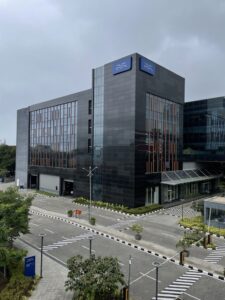
Grade A office demand in Abuja is dominated by a distinct client profile compared to Lagos: government agencies, international development organisations, oil and gas operators, and major Nigerian corporates with significant federal engagement. This shapes the design brief in specific ways.
Government and institutional specification tends toward functional gravitas rather than commercial flamboyance, spaces that project authority, stability and competence rather than the brand-forward design language that characterises much of Lagos’s corporate sector. MOD-ii’s government and institutional office work reflects this: considered material choices, restrained but high-quality finishes, and meeting and reception spaces designed to host high-stakes negotiations and formal protocol.
Security and access control are routinely integrated requirements, even for non-diplomatic government and oil sector clients, given the sensitivity of much of the work conducted in Abuja’s institutional offices.
Power resilience remains essential, exactly as it does across every Nigerian commercial market. MOD-ii designs every Abuja project around proper power autonomy, a particularly important consideration for government and embassy clients whose operations cannot tolerate the disruption of an unreliable backup system.

Abuja’s 2026 commercial market is defined by institutional stability, a landmark hospitality benchmark, and a formalising property market that rewards genuine design investment. Whether you are planning a government office fit-out, an embassy interior, or a hospitality project positioned against the Transcorp Hilton standard, MOD-ii’s team brings over a decade of Abuja-specific delivery experience.
Contact our design team to discuss your project.
