
There is a word that walks into almost every briefing room in Lagos before the client does.
“We want something minimalist.”
We have heard it from bank executives, restaurateurs, hotel developers, and young couples furnishing their first apartment in Lekki. And after years of listening carefully, we can tell you what that word almost never means when a Nigerian client says it.
It almost never means minimalism.
What clients say versus what clients want

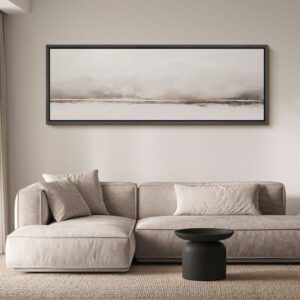
Minimalism, the real thing, is a philosophy with a passport. It descends from Zen Buddhist restraint, post-war European austerity, Mies van der Rohe’s “less is more,” and the near-monastic interiors of designers like John Pawson. Its central commitment is self-effacement: the belief that a space achieves its highest purpose by disappearing. Colour is suppressed because colour makes claims. Ornament is removed because ornament asserts personality. The room is designed to whisper, and ideally, to say nothing at all.
Now hold that definition up against what the Nigerian client actually shows you when they open their saved images.
They show you rooms with confident colour. Statement lighting. A sculptural chair someone will photograph. Bold art. Warmth. Presence. What they are pointing at, almost every time, is not minimalism, it is clarity. Clean lines, concealed storage, no clutter, nothing accidental. They want a space that has been edited, not a space that has been silenced.
These are profoundly different briefs. One asks the designer to remove personality. The other asks the designer to concentrate it.
How one borrowed word degrades the work

When the word is taken at face value, the failure is predictable, and we have watched it play out across this industry for years.
The client says “minimalist.” The designer, eager to comply, delivers the Google Images version: grey sofa, white walls, one sad pampas arrangement, LED strip in the ceiling. The client looks at the finished space and feels a disappointment they cannot articulate, because technically they got what they asked for. The room is clean. It is also lifeless. It looks like a phone showroom. Six months later they are layering in colour and objects themselves, fighting the design instead of living in it.
Or the failure runs the other way: the designer senses the client doesn’t really mean it, delivers something expressive, and the client, armed with the vocabulary but not the definition, pushes back that it “isn’t minimalist enough.” Rounds of revisions follow. Budgets bleed. Trust erodes. Both parties are negotiating in a language neither of them is actually speaking.
Either way, the casualty is the same: quality. Not quality of finish, quality of fit. The most beautifully executed room in the world is a failure if it answers a question the client never asked.
This is why at MOD-ii we treat the brief as a diagnosis, not a transcription. When a client says “minimalist,” our job is not to write the word down. Our job is to find the desire underneath the vocabulary. Do you want quiet, or do you want order? Do you want absence, or do you want intention? In our experience, Nigerians overwhelmingly want the second thing in each pair. They want spaces that are disciplined and alive.
The deeper problem: aspiring in someone else’s language

But there is a second conversation hiding inside this one, and it is the conversation MOD-ii was founded to have.
Why is “minimalism” the word on everyone’s lips in the first place?
It is not because Nigerians studied the movement and found it answered something in us. It is because global design media, Pinterest algorithms, and decades of Western cultural dominance have installed one aesthetic as the international shorthand for “tasteful.” Minimalism became the default aspiration the same way English became the default boardroom language, not through a fair contest of ideas, but through the sheer gravity of who has been setting the terms.
And so we find ourselves in an odd position: a continent with some of the richest visual cultures on earth, describing our dream homes in the vocabulary of Scandinavian austerity.
Let us be precise here, because precision is the point. This is not an argument that restraint is un-African. That claim would erase real traditions: the disciplined geometry of Hausa architecture, the tonal calm of mud-and-earth building across the Sahel, the considered emptiness in a courtyard house. Afro-minimalism exists, and it is not a beige translation of a European idea; it is its own language with its own ancestors. African design contains multitudes, including quiet ones.
The argument is narrower and sharper: the default should not be imported. When restraint appears in our work, it should be our restraint, earned from our own material culture, our own climate, our own ways of gathering, not a costume borrowed because an algorithm told us it signals sophistication.
Because here is what the borrowed default costs us. The dominant registers of West African visual culture are not self-effacing. Adire does not whisper. Aso-oke does not apologise. Our architecture of gathering, the compound, the veranda, the courtyard, is social, layered, generous. Colour, pattern, and presence are not decoration in our traditions; they are information. They carry lineage, status, occasion, joy. A design culture like that, reaching reflexively for an aesthetic of disappearance, is not expressing taste. It is expressing amnesia.
What we should be asking for instead
So here is our proposal, to clients and to our fellow designers.
Retire “minimalist” as a brief. Not because the word is evil, but because it is doing too many jobs badly. Replace it with the questions it was hiding:
Ask for editing, not erasure. Every great room, in every tradition, is edited. Nothing accidental, nothing apologetic. That discipline is universal, and it is fully compatible with colour, pattern, and presence.
Ask where the volume should live. A well-designed space chooses what speaks loudly and what stays quiet. A calm envelope that stages one confident gesture, a wall of pattern, a sculptural seat, a saturated colour field, is not minimalism. It is emphasis. Most Nigerian clients, shown both options honestly, choose emphasis every time.
Ask what tradition the clarity comes from. If you want quiet, magnificent. But let it be a quiet with ancestors here, the geometry, materials, and proportions of this continent, not a rented silence from a Copenhagen showroom.
The future of Nigerian interior design will not be won by chasing the aesthetics of elsewhere with a five-year delay. It will be won by design that is as edited as anything in Milan and as unmistakably ours as anything in our grandmothers’ wardrobes. Disciplined, intentional, culturally literate, and entirely unafraid to be seen.
Because the most sophisticated thing a space can do is not disappear.
It is to know exactly what it is saying, and say it without apology.
